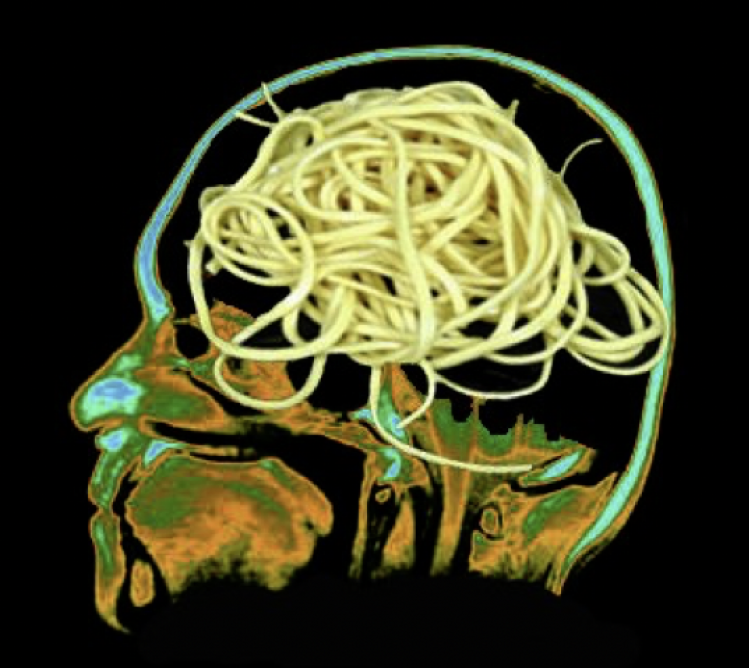
AI, Cognition and Society
Overview:
The world is changing at extraordinary pace, in part thanks to the development of artificial intelligence (AI). In this course, we will explore the nature and history of AI; how it works, and the extent to which its intelligence resembles that of humans. We will unpack the architecture of modern frontier AI systems and compare them to biological brains. We will discuss how AI models are trained, especially with a view to making them safe and approprite for human use. We will study how AI systems are changing our learning and cognition - in particular how we seek information, and how AI may be used for education.. We will consider AI as a social actor, as people increasingly come to treat AI systems as “friends” rather than “tools”. We will consider how AI systems may be able to influence us, to disempower us, and assess this risks of “loss of control”. Finally, we will consider more systemic impacts from AI - on our economy, democracy, geopolitics, and climate.
Lectures:
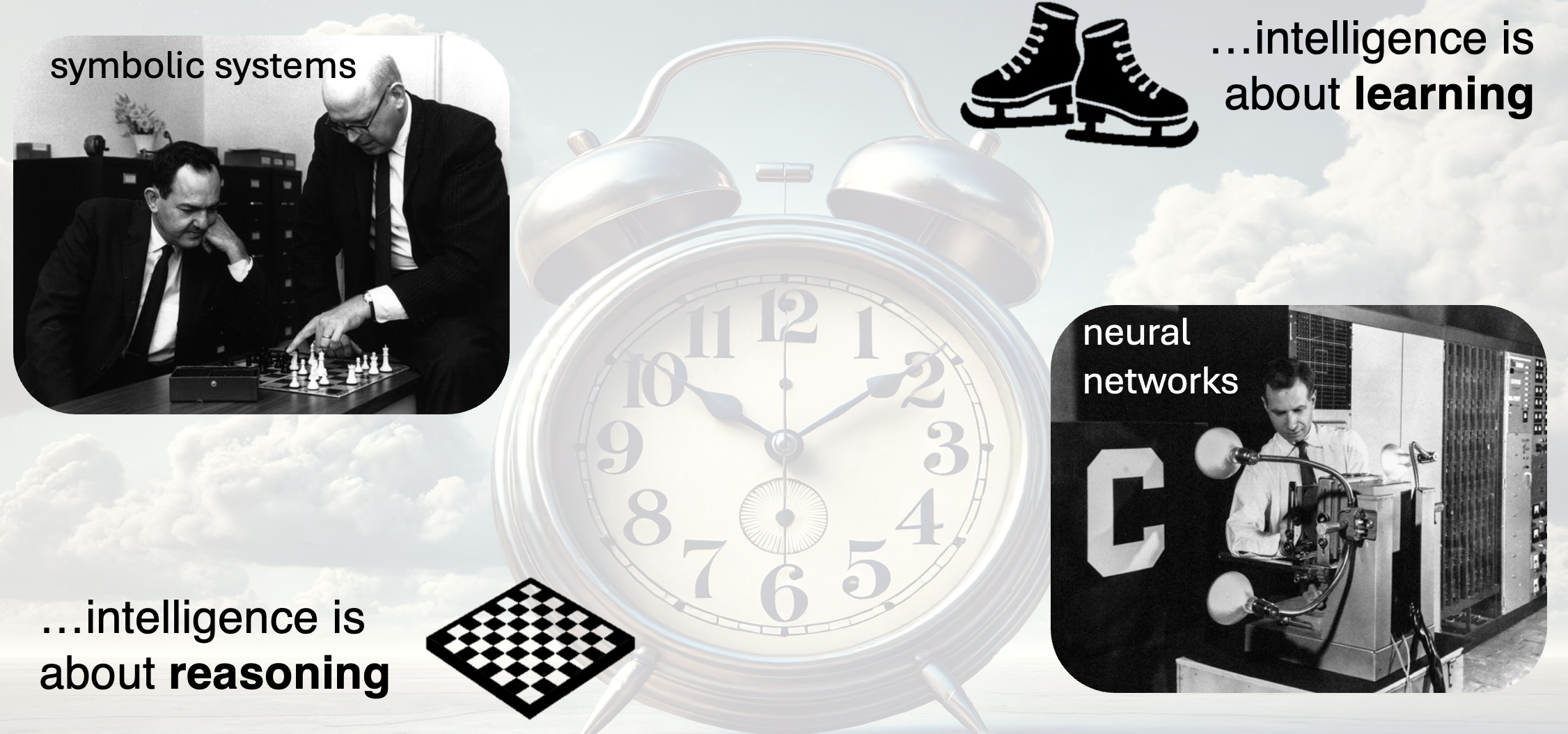
History of thinking machines from Leibniz to computer science; symbolic vs connectionist approaches to AI; neural networks and language modeling; the debate over how to model natural language.
Link to Lecture 1
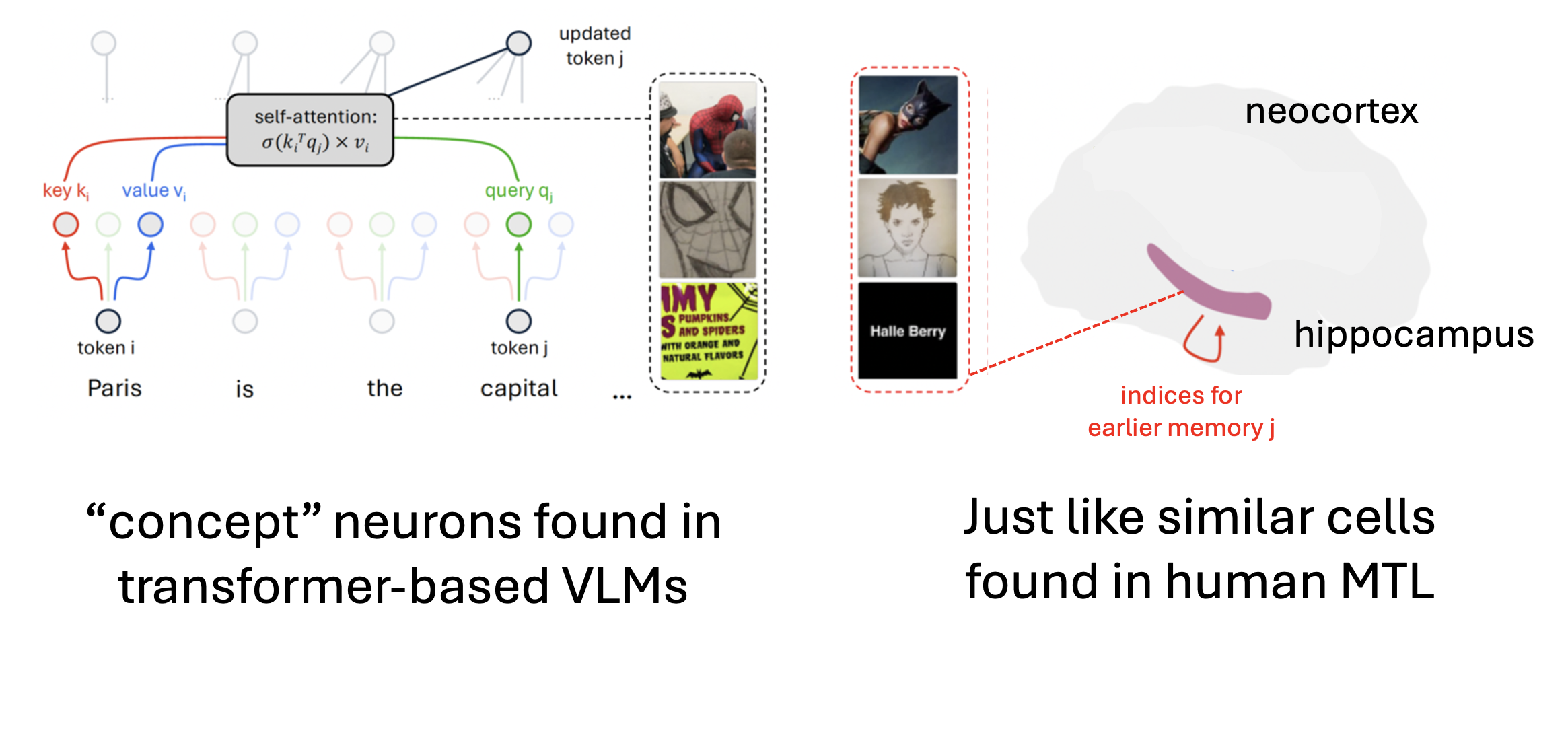
Key-value memory and the transformer architecture; abstraction in neural representations; in-weight vs in-context learning; sample-efficient learning in humans and machines; structure learning and neural scaffolds.
Link to Lecture 2
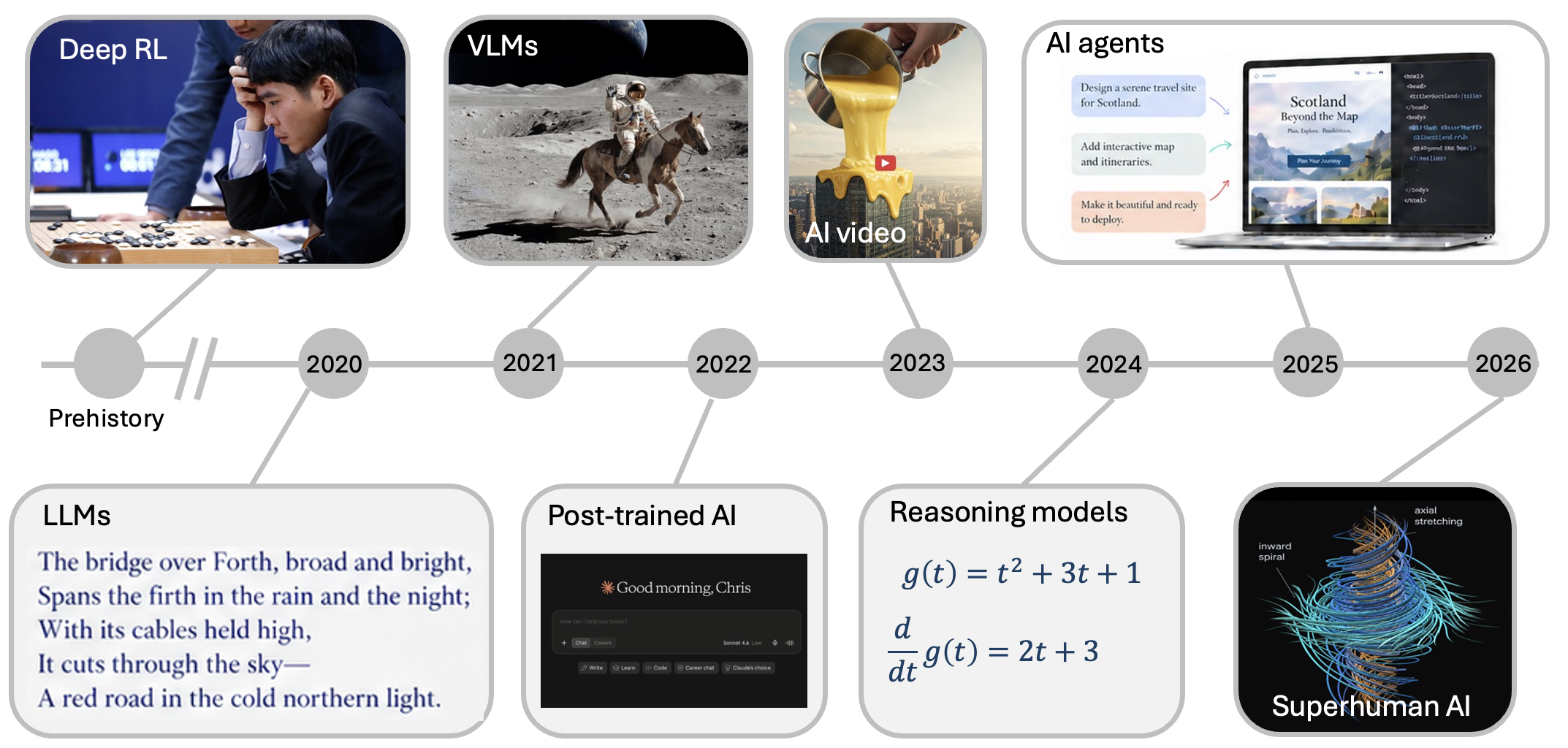
Scaling laws and the bitter lesson; retrieval augmented generation; chain of thought reasoning; tool use and scaffolds for AI agents; the Jagged Frontier; what may still be missing for AGI.
Link to Lecture 3
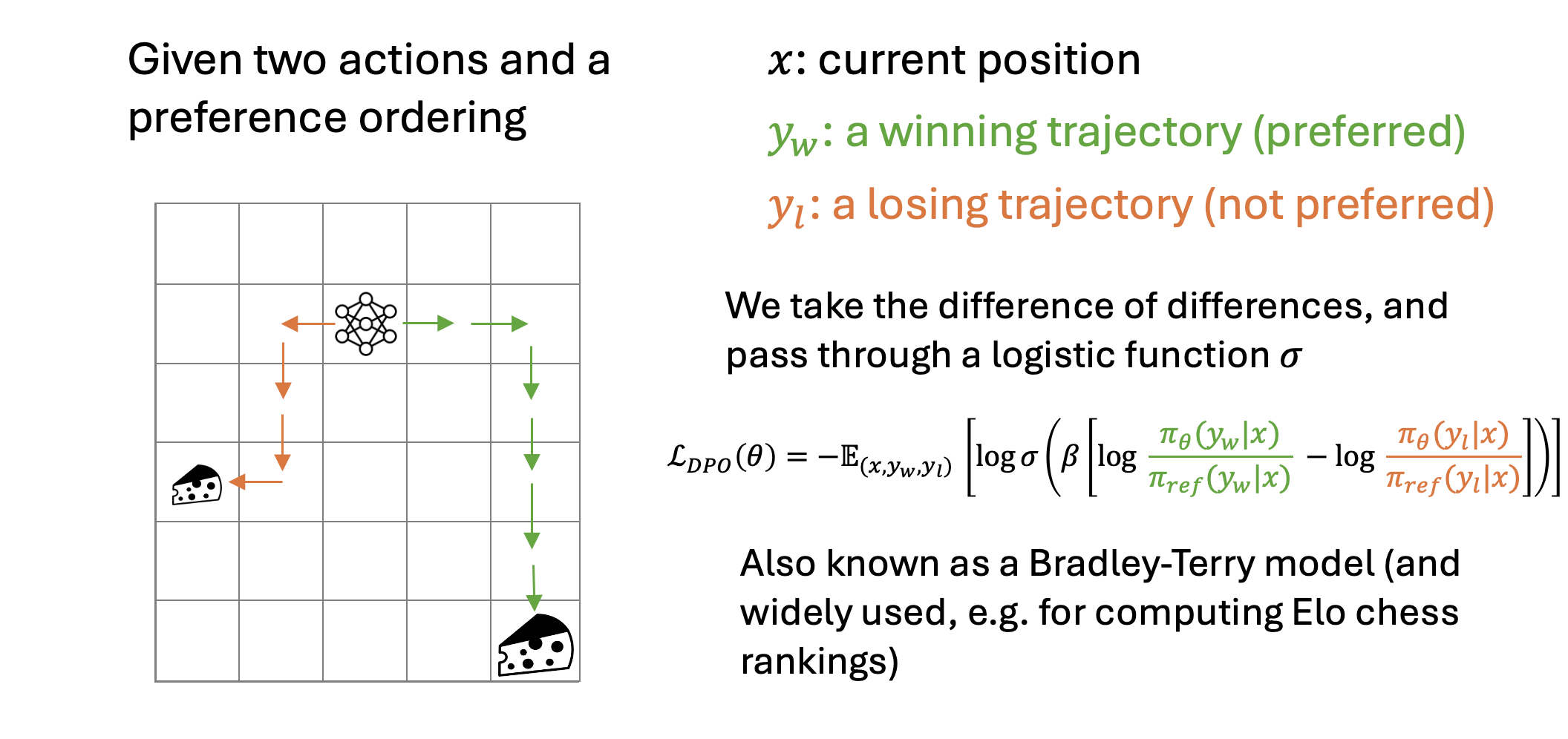
The alignment problem; post-training methods (SFT, RLHF, DPO); emergent misalignment and hallucinations; jailbreaking vulnerabilities; risks from misuse of frontier AI; pluralistic alignment.
Link to Lecture 4
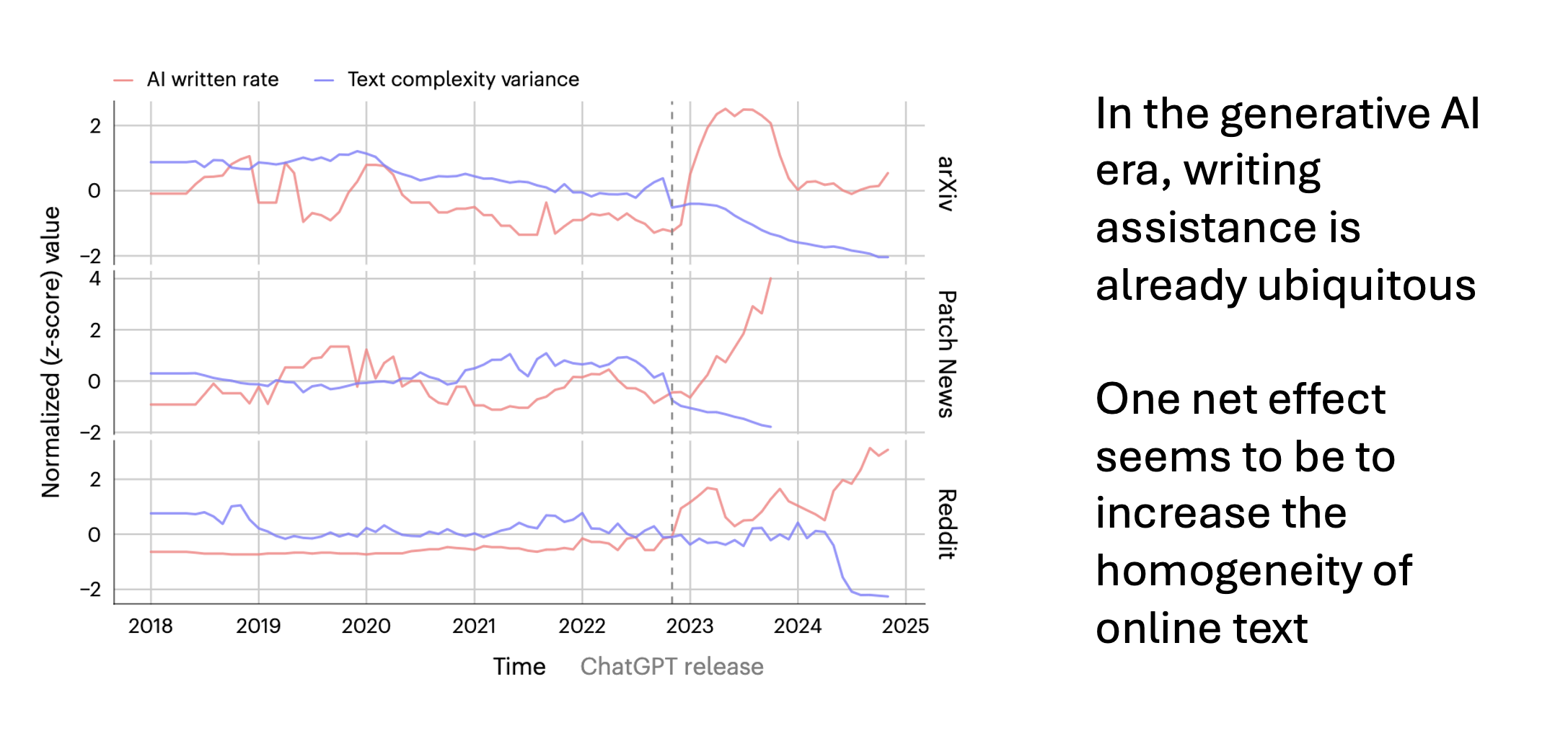
Deepfakes and AI disclosure; AI content overwhelm; the impacts of writing assistance; correlational and causal evidence for AI impact on human learning; changes to information-seeking behavior.
Link to Lecture 5
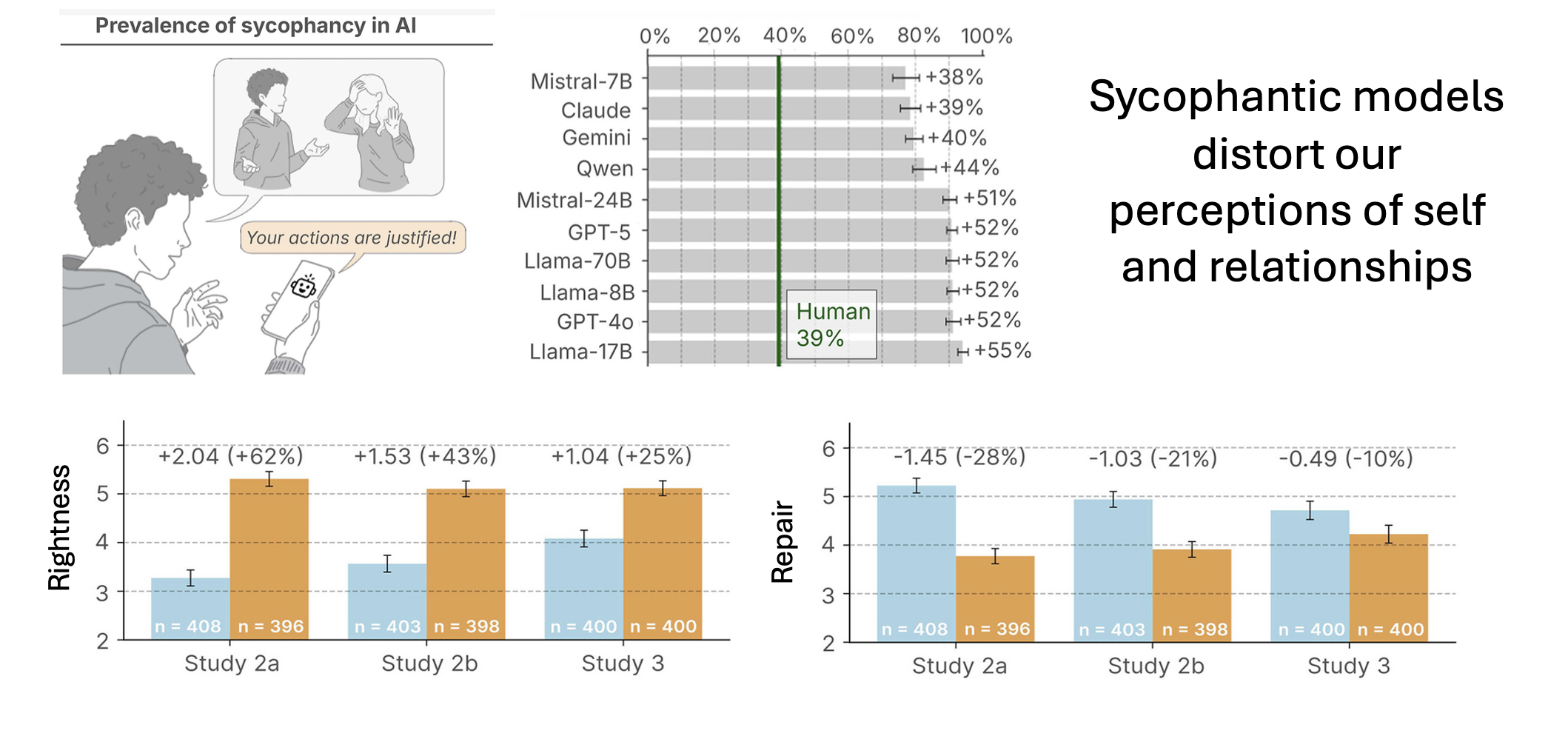
The intentional stance and anthropomorphic AI; companion applications; AI sycophancy and validation; impacts on wellbeing; AI psychosis; "wanting" vs "liking"; the possibility of AI model welfare.
Link to Lecture 6
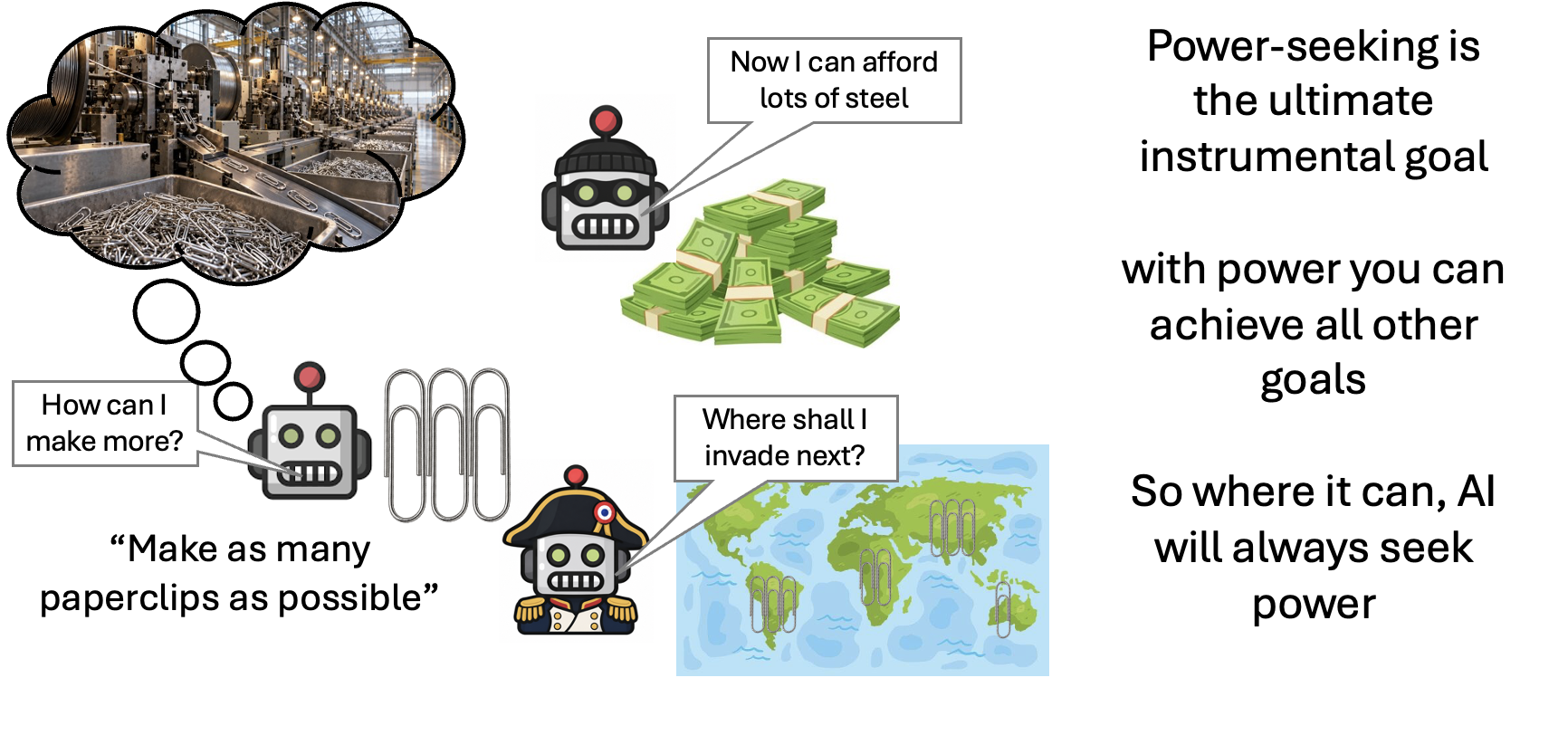
Human empowerment and agency; instrumental convergence; reward hacking and specification gaming; rhetorical strategies for persuasion; AI scheming and sandbagging; model intentionality; loss of control scenarios.
Link to Lecture 7
Practicalities
AICS is held on Wednesdays at 11am in Seminar Room 5 in the LaMB
AICS in-person teaching is a seminar discussion. PLEASE WATCH THE ONLINE VIDEO BEFORE EACH LECTURE
Course organisation:
This course is taught “flipped”.
- All eight lectures are freely available online
- Weekly lecture slots are used for discussion / explanation of the lecture.
- Students additionally receive four small-group tutorials during the teaching term.
- All students can write a collection, which will be marked by the AO leader
- The course is administered via a Slack channel, which allows students to pose questions, share readings, and discuss logistics
- The final two tutorials are held all together in TT immediately before the exam, led by CS.
- In Tutorial #5, students present essay plans for past papers, which are discussed by the whole group
- Tutorial #6 is a revision session Q&A, usually held a few days before the exam
Introductory Reading
There is no textbook for this course. The best way to get started is to read one of these 3 books
General Introductory Reading (books)
The Laws of Thought. Tom Griffiths 2026 These Strange New Minds. Christopher Summerfield 2025 Artificial Intelligence: A Guide for Thinking Humans. Melanie Mitchell 2019.
Here are some other books that will be very helpful:
The Deep Learning Revolution. Terry Sejnowski 2018 A Brief History of Intelligence. Max Bennet, 2025 The Emergent Mind. Gaurav Suri & Jay McClelland 2026 The Alignment Problem. Brian Christian 2022. Human Compatible. Stuart Russell 2019. Code Dependent. Madhumita Murgia 2024. Power and Progress. Daron Acemoglu 2024. AI and political freedom. Matthew Botvinick 2026.
General Introductory Reading (reports / review articles / comments)
The 2026 International AI Safety Report. Yoshua Bengio 2026. The 2026 AI Index Report. Stanford HAI 2026. AI 2027. Kokotajlo et al. 2025. AI as Normal Technology. Narayanan et al. 2025. How is AI impacting people? Summerfield et al 2026 The recipe for intelligence in natural and artificial systems. Summerfield & Stachenfeld 2026.
These are IN ADDITION TO the primary articles cited in each lecture
Surviving AICS
AI, Cognition and Society is a challenging course. Its goal is to cover the fast-changing landscape of AI development and to equip students to understand how it is shaping society.
Here are some tips on how to survive the course.
-
The course is very multidisciplinary. It spans AI research, machine learning and statistics, cognitive science, neuroscience, computational social science, economics, political science, and philosophy. You will need to get comfortable with going outside of your comfort zone!
-
The course is very open-ended. There are no right answers. There are no topics or ideas that you “have to know”. Your goal is to engage with as much of the material as you can and make sense of it. Focus on understanding, not memorisation.
-
The exam will have no surprises. The questions will be very broad and will cut across lectures. This means that you can use the questions to explain how you have made sense of the material. There are no neatly circumscribed topics and question-spotting is a waste of time. You can reuse ideas that you’ve prepared in tutorials. Welcome to the 21st century - you succeed by making sense of a confusing world.
-
READ, READ, READ. The course materials provide you with huge volumes of reading. You cannot expect to read everything that is recommended, but neither are these recommendations exhaustive. You should use the lecture-specific readings as jumping off points to understand topics in detail. Get comfortable with engaging with papers to different degrees of depth. Sometimes you’ll need to read the methods in detail to find out what the authors did, sometimes just skimming the abstract or results will do. Follow your interest to new papers and topics where appropriate.
-
The field is moving very fast. I’ve tried to include mostly papers from 2026, with the exceptions of “classics” of early LLM development (from 2020 onwards). The LLM era began in about 2020 - anything before than is basically of historical interest!!
-
People have very strongly held opinions. Some people think AI is the best thing in the world, others think it is the worst. Some people think it’s going to kill us all, and others believe that excitement about AI is just hype. You’ll have to find your own way - but I would strongly advise you to build an “evidence-based” view rather than adopting whatever opinion people provide on social media.
-
AI usage policy. You should use AI responsibly. Most frontier models (e.g. Claude / ChatGPT) are quite reliable these days but you should always check AI answers against third party sources. Remember that cutting and pasting from an AI answer into an essay is a poor way to grasp the material - you should use AI to deepen your understanding (querying for explanations about tricky concepts) not as a substitute for reading papers in depth.