Flightless Professors
Science. As a land animal.
September 14, 2019
I’m an academic researcher based in Oxford, UK who studies human behaviour and brain function. In September 2019, I joined a growing movement of academics committed to reducing or eliminating air travel.
The goal of this site is to explain my rationale for not flying (especially to those whose kind invitations to visit I have declined), to document my experiences, and to offer information and suggestions for others who might choose to make the same decision.
Introduction
My colleagues recognise that climate change is real and that it is caused by human activity. And yet academics fly a lot – to conferences, to give invited lectures, to meet collaborators, to attend committee meetings, and so on. I have personally averaged 10-15 flights a year over the past decade, to countries including France, Germany, the Netherlands, Belgium, Spain, Italy, Portugal, Switzerland, Ireland, Hungary, Austria, the USA, and Korea. The reasons are obvious – air travel is cheap and quick.
As researchers, we have two basic responsibilities: to generate new knowledge, and to share that knowledge with others. Giving talks, and meeting other researchers (whether the interactions are over dinner or in the coffee breaks at conferences) is central to our scientific activities. At the same time, we are also acutely aware that aviation is a major contributor to climate change.
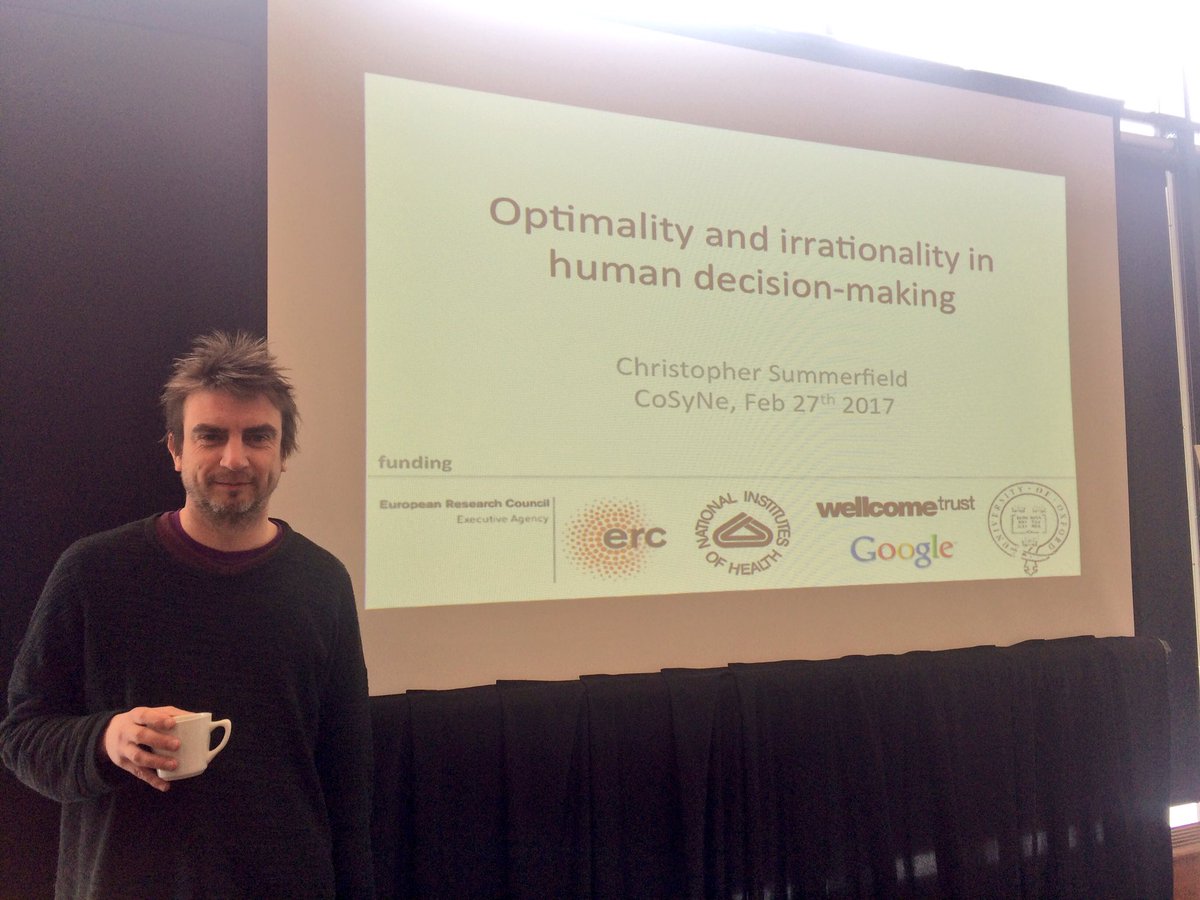 Chris giving a talk at Cosyne 2017 (Salt Lake City, USA)
According to carbon calculation websites, my emissions without adding flights are just under the UK average of around 10 tonnes a year. But if I add in flights – roughly 2 tonnes per long-haul flight and 0.5 tonnes per short-haul flight – this more than doubles.
 Amazon rainforest fires, August 2019
Methods
For researchers based in Europe, sustainable travel is often feasible. seat61.com is a rail enthusiast network primarily (but not exclusively) focused on travellers from the UK that documents train routes around the world.
Travel times from London:
- Paris: 2 hours (via Eurostar)
- Barcelona: 6 hours
- Berlin: 10 hours
Train travel is somewhere between 2 and 5 times less costly in terms of emissions than air travel, depending on the distance. ecopassenger.org allows you to compare emissions across different modes of transportation.
Transatlantic travel
Reaching the US by plane remains common, though cruise ships are arguably more polluting than air travel. One option is to combine multiple visits into single trips or to travel less frequently.
Videoconferencing
Remote communication via platforms like Google Meet and Zoom offers significant potential, though university investment in such technology remains limited.
Social considerations
Land-based travel’s longer duration might impact families and potentially worsen gender inequality in science, though fewer overall trips could benefit work-life balance.
Results
In September 2019, I made the decision to avoid flying and developed alternative travel plans:
- Cancelled pending trips to the USA
- Identified feasible train routes to European conferences in Magdeburg, Salzburg, and Marseille
- London to Vienna is achievable by train in approximately 12 hours
- Plans to use sleeper trains (such as the Austrian “Nightjet”)
Strategy changes
My work modifications include:
- Fewer but longer trips with maximum impact consideration
- Only accepting invitations to large conferences or easily accessible destinations
- Cancelled a research visit to Hamburg
- Offering videoconference alternatives for presentations
Declined invitations
I received two new invitations that were declined:
- Research seminar in Germany
- Conference talk in Beijing
Both were offered as videoconference alternatives, which were rejected by the organisers.
International conference exploration
For the ICLR machine learning conference in Addis Ababa, I explored a hypothetical overland route: train to Marseille, freighter to Alexandria, Nile steamer and train to Khartoum, then bus to Addis Ababa—totaling approximately 6 weeks each direction.
Discussion
There is increasing awareness among academics that in order to help minimise the effects of climate change, we should fly less or not at all. A recent review article highlighted this issue for cognitive scientists.
Notable advocates
Prominent neuroscientists like Russ Poldrack and Adam Aron have publicly committed to reduce or eliminate their air travel.
Institutional action
The University of Ghent has implemented policies requiring researchers to choose more sustainable travel options for academic visits and conferences.
Industry response
Nature journal has explored how conferences could be made more environmentally responsible. The Wellcome Trust has also published related commentary.
Alternative initiatives
- UCL’s Affective Brain Lab runs a remote speaker series
- Sam Gershman created a website enabling researchers to advertise trips, potentially allowing visits to be combined efficiently
Contact
christopher.summerfield [at] psy.ox.ac.uk
For more information about my research, visit the HIPlab website.